

Introduction
The golden age of pearling and dhow trade in the Arabian Gulf gave rise to a highly specialized and evocative vocabulary—a linguistic world that was as vast and deep as the sea itself. This lexicon, born from the decks of wooden sailing vessels, was essential for coordination, safety, and survival during long and perilous voyages. While the commercial era of the dhow has passed, these nautical terms remain a cherished part of the Emirati dialect, a linguistic anchor connecting the present to a defining chapter of the nation’s maritime heritage.
The Crew and Their Roles: A Hierarchy at Sea
Life on a dhow was structured around a clear hierarchy, with each role denoted by a specific title.
- Al Nakhuda: The captain and owner of the vessel. A figure of immense authority, experience, and responsibility.
- Al Mu’allim: The navigator, a master of reading the stars, winds, and currents.
- Al Tabbab: The ship’s cook, responsible for feeding the entire crew for months at sea.
- Al Ghaws: The pearl diver, who performed the dangerous work of descending to the seabed.
- Al Siyyib: The puller, the diver’s partner on the surface, responsible for hauling him back to safety with the rope.
- Al Raddad: The repairman, who maintained the ship and its rigging during the voyage.
This specialized terminology ensured that every man knew his place and his duty, creating a seamless and efficient operational unit.
The Dhow and Its Parts: Anatomy of a Sailing Vessel
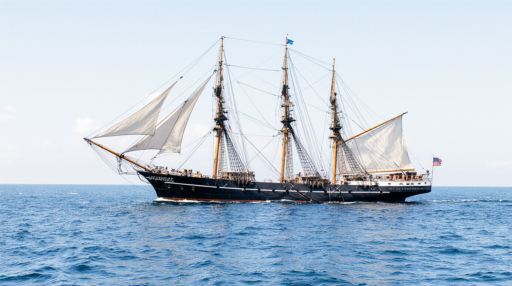
Every part of the dhow had a name, reflecting the intimate knowledge sailors had of their craft.
- The Hull: “Qa’r al-markab” (the bottom of the ship).
- The Mast: “Al-daqal.”
- The Sail: “Al-sheira.”
- The Rudder: “Al-sukkan.”
- The Anchor: “Al-mirsa.”
- The Rope: “Al-habl,” with specific names for the diver’s rope (“yid”) and the anchor rope (“bit al-mirsa”).
This precise language was crucial for giving commands and carrying out repairs in the middle of the ocean, where a misunderstood word could lead to disaster.
The Language of the Pearling Dive: A Ritual of Risk
The pearling process itself was governed by a specific set of terms and commands.
- The Dive: “Al-ghous.” The head-first dive to the seabed.
- The Descent: The command from the Nakhuda to begin diving was “Yallah yamma!” (Let’s go to the water!).
- The Weight: “Al-hayyar,” a stone weight used by the diver to descend quickly.
- The Net: “Al-dayeen,” the net carried by the diver to collect oysters.
- The Signal: The diver would signal to be pulled up by tugging on the rope.
Understanding this language was a matter of life and death, creating a bond of absolute trust between the ghaws and his siyyib.
Weather, Winds, and Navigation
The success of a voyage depended on reading the environment, and the dialect is rich with terms for natural phenomena.
- Winds: “Al-barih” (north wind), “Al-kous” (south wind). Each wind had specific characteristics and implications for sailing.
- Tides: “Al-madd” (high tide), “Al-jazr” (low tide).
- Stars: The navigator (mu’allim) used stars like “Al-jauza” (Orion) and “Al-farqadan” (the two bears of Ursa Minor) to chart the course.
This vocabulary represents a deep, empirical science developed over generations of seafaring.
Conclusion: Echoes from the Deep
While the sound of the Nakhuda’s commands no longer echoes across the water, the language of the dhow era is preserved in the memories of elders, in museums, and in the cultural consciousness of the nation. These words are more than historical curiosities; they are the linguistic DNA of the UAE’s coastal communities. They tell a story of courage, skill, and a profound relationship with the sea. To learn these terms is to honor the memory of the men who braved the depths and sailed the monsoon winds, building the economic and cultural foundations of the modern Emirates upon the deck of a wooden boat.