


Introduction
In a nation where over 80% of the population are expatriates and English serves as a dominant lingua franca for business and daily life, the Arabic language faces unique challenges. Recognizing Arabic as a vital pillar of national identity and cultural continuity, the UAE has launched a series of ambitious and strategic initiatives to champion, protect, and promote its use. This is not a rejection of multilingualism but a conscious effort to ensure that the mother tongue of the nation remains vibrant, relevant, and central to its future, both online and offline.
The Arabic Language Charter: A National Commitment
A foundational moment in this effort was the 2012 announcement of the “Arabic Language Charter” by His Highness Sheikh Mohammed bin Rashid Al Maktoum. This charter established Arabic as the fundamental expression of the national identity and a core component of the cultural fabric. It mandated that all government entities prioritize the use of Arabic in official communication, naming, and branding. This top-down directive sent a powerful message about the language’s official status and its importance in the public sphere, ensuring it remains visible and authoritative.
The Abu Dhabi Arabic Language Centre: A Hub for Renaissance
A key institution driving this mission is the Abu Dhabi Arabic Language Centre (ALC), under the Department of Culture and Tourism. The ALC’s mandate is comprehensive and ambitious. It focuses on:
- Supporting Arabic Content Creation: Funding and promoting the translation of international works into Arabic and supporting Arab authors to enrich the available literature.
- Digital Empowerment: Developing advanced digital tools, such as Arabic language processing software and online learning platforms, to ensure Arabic thrives in the digital age.
- Academic Research: Sponsoring linguistic research, dictionaries, and studies on Arabic grammar and usage to preserve its integrity and guide its modern evolution.
The ALC is the strategic engine behind many of the UAE’s most impactful language programs.
“Bil Arabi?” Initiative: Making Arabic Cool
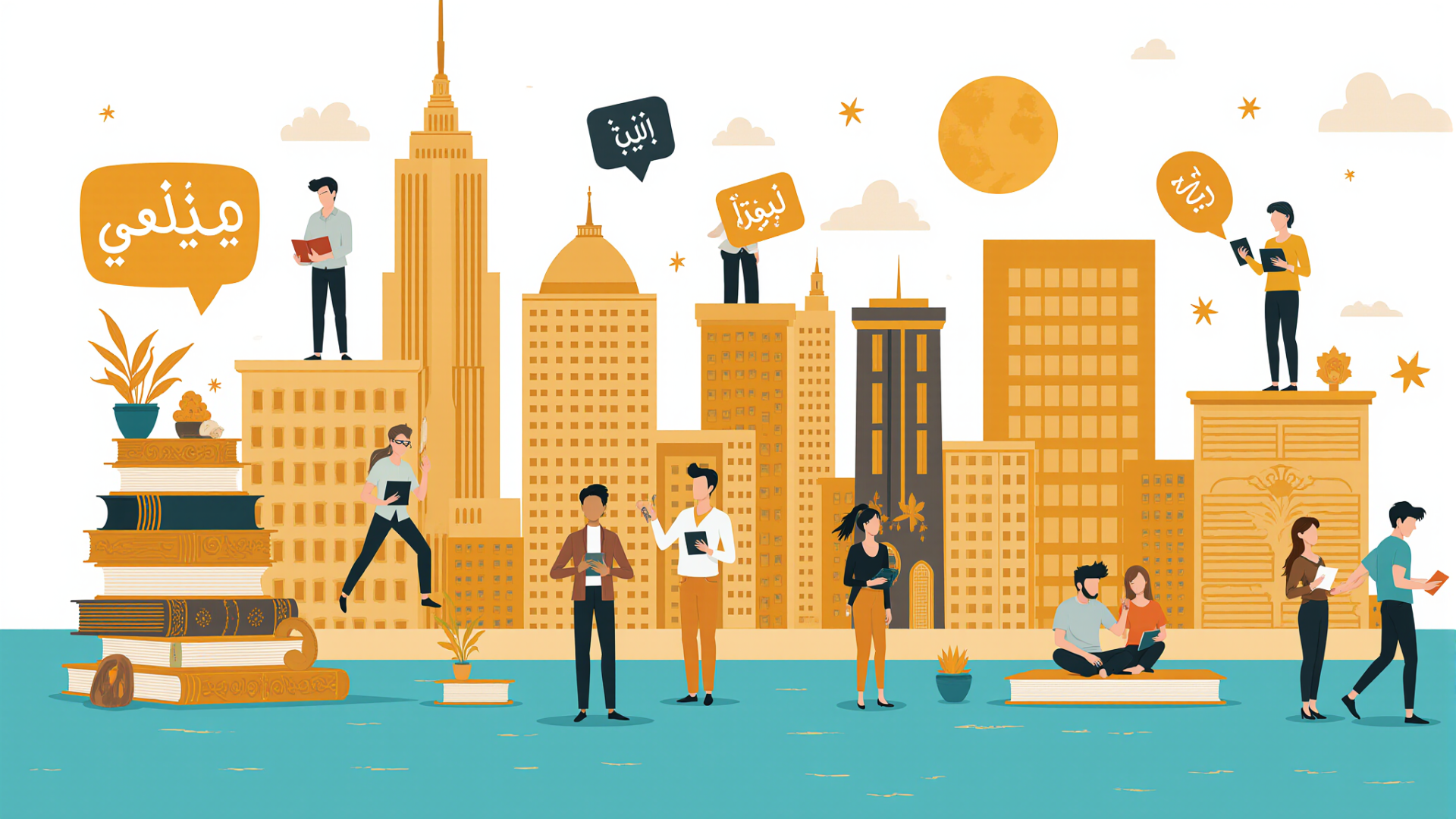
Understanding that the future of the language lies with the youth, the “Bil Arabi?” (In Arabic?) initiative was launched. This is a vibrant, modern campaign designed to make Arabic appealing to young people. It uses social media, influencers, and trendy graphics to encourage youth to communicate, create content, and express their identity in Arabic. By associating the language with creativity, pop culture, and self-expression, “Bil Arabi?” works to counter the perception that Arabic is only for formal or religious contexts, ensuring its relevance in everyday life.
Integrating Technology and Education
The UAE is leveraging technology to safeguard its linguistic heritage. This includes:
- Mohammed bin Rashid Library: A monumental institution that serves as a vast repository of Arabic texts and a center for literary events.
- AI and Language: Investing in Artificial Intelligence for Arabic, developing smart tools for translation, content creation, and speech recognition to bridge the digital divide.
Within the education system, there is a renewed emphasis on innovative teaching methods for Arabic, moving beyond rote memorization to foster a genuine love for the language’s beauty and expressive potential among students.
Conclusion: Building a Linguistic Future
The UAE’s approach to championing Arabic is a model of proactive, 21st-century language planning. It combines strong government policy with cultural marketing, academic research, and digital innovation. The goal is not to create a linguistic fortress but to build a confident, bilingual society where Arabic and English can coexist, with Arabic holding its rightful place as the soul of the nation. By investing so heavily in these initiatives, the UAE is ensuring that its ancient language does not merely survive but actively shapes the nation’s cultural and intellectual landscape for generations to come.